How to Avoid Getting Scammed by a Web Developer in Nigeria


For SMEs

- 6 Apr, 2026
- 32 Views
- 0 Comment
The product is good. The service is solid. The owner works hard.
And yet the business struggles online. Leads do not come. The website sits there collecting dust. Social media posts go out and get ignored. Month after month nothing changes.
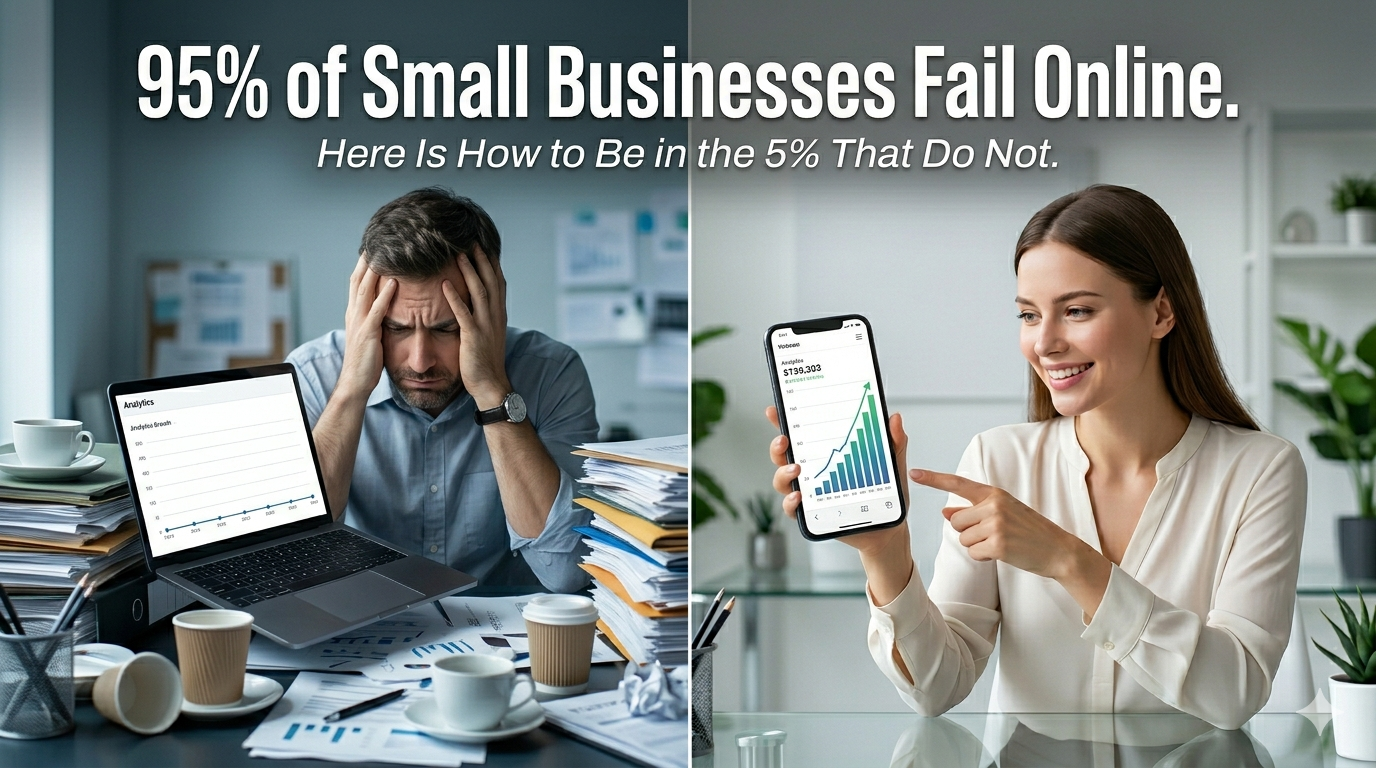
This is not a rare story. It is the default story for most small and medium businesses that try to build a presence online. The statistics are uncomfortable. The vast majority of SMEs that go online do not succeed at it. Not because they are not capable. Not because their business is bad. But because they make the same predictable, avoidable mistakes over and over again.
This post is going to show you exactly what those mistakes are and more importantly how to make sure your business is not making them.
They Confuse Being Online With Having a Strategy
The first and most fundamental mistake is thinking that simply existing online is enough.
A business owner builds a website. Ticks that box. Creates an Instagram page. Ticks that box. Sets up a Facebook page. Ticks that box. And then waits for customers to show up.
They do not show up.
Being online and having a digital strategy are two completely different things. One is a presence. The other is a plan. Most SMEs have the presence without the plan and wonder why the presence is not doing anything.
A digital strategy means knowing exactly who your customer is, where they spend their time online, what they are searching for, what content will attract them, and what path you want them to follow from the moment they discover you to the moment they pay you.
Without that strategy, everything you do online is just activity. And activity without direction does not produce results.
They Build a Website and Then Forget It Exists
A website is not a billboard. You do not build it, put it up, and walk away. It is a living, working part of your business that needs attention, content, updates, and ongoing optimisation to perform.
Most SMEs build a website in the first year and then leave it completely untouched for the next three years. No new content. No updates. No improvements based on what is working and what is not.
Google notices this. Customers notice this too. A website with content that has not been updated since 2022 sends a quiet but powerful message. This business is not active. This business might not even still be operating.
The businesses that succeed online treat their website like a staff member. They invest in it, update it, improve it, and give it the tools it needs to do its job properly.
They Try to Reach Everyone and End Up Reaching Nobody
This is one of the most common and most costly mistakes in small business marketing. The desire to appeal to as broad an audience as possible results in messaging so vague and generic that it resonates with nobody.
“We offer quality services at affordable prices.”
“Your satisfaction is our priority.”
“We are committed to excellence.”
These phrases mean absolutely nothing to a potential customer. They tell them nothing specific about what you do, who you do it for, or why you are different from the dozens of competitors saying the exact same things.
The businesses that succeed online are ruthlessly specific. They know exactly who their customer is. They speak directly to that person’s specific problem in language that customer actually uses. And because of that specificity, when the right person finds them, the connection is immediate.
Being specific feels risky. It feels like you are excluding people. But the reality is that being generic is what actually excludes people because it fails to connect with anyone deeply enough to make them act.
They Underinvest in Their Digital Foundation
There is a version of saving money that is actually losing money. And one of the clearest examples of it is cutting corners on your website.
A poorly built website that loads slowly, breaks on mobile, looks unprofessional, and has no SEO structure is not a cheap website. It is an expensive one. Because it is actively costing you customers every single day it exists.
Many SMEs spend years with a website that is quietly destroying their credibility. Potential clients land on it, form an impression within seconds, and click away. The business owner never knows it happened. The analytics might show bounce rates but few business owners dig deep enough to understand what that number is really telling them.
Your digital foundation is the most important investment you can make. The website. The speed. The mobile experience. The SEO structure. The copy. Get these right and everything else becomes easier. Get them wrong and no amount of social media posting or marketing budget will fix the underlying problem.
They Have No Consistent Content Strategy
Content is how the internet works. Google exists to surface content that answers people’s questions. Social media algorithms exist to distribute content that people engage with. Email works because content gives people a reason to open messages.
Businesses that succeed online create content consistently. Not perfectly. Not expensively. Consistently.
Businesses that fail online either create no content at all or create it in sporadic bursts followed by long silences. They post for three weeks and then disappear for two months. They write one blog post and never write another. They start a newsletter and abandon it after the third issue.
The internet rewards consistency above almost everything else. A business that publishes one genuinely useful blog post every two weeks will outrank and outperform a competitor who publishes ten posts in January and then goes quiet until July.
Content is a long game. The businesses that understand and accept that are the ones still growing a year from now while everyone else has given up and concluded that content marketing does not work.
They Ignore Their Data
Most SMEs have access to more data about their customers and their digital performance than any previous generation of business owners could have imagined. And most of them ignore it completely.
Google Analytics tells you exactly which pages people visit, how long they stay, and where they drop off. Google Search Console tells you which keywords bring people to your site. Your email platform tells you which subject lines get opened and which links get clicked. Your social media analytics tell you which content resonates and which falls flat.
All of that information is a map. It shows you exactly what is working and exactly what is not. And most SMEs never look at it.
The businesses that succeed online make decisions based on data. They notice when a particular blog post drives significantly more traffic and write more posts on that topic. They notice when a specific email subject line doubles their open rate and replicate that approach. They notice when a page has a high exit rate and investigate why people are leaving.
You do not need to be a data scientist to use this information. You just need to look at it regularly and ask yourself what it is telling you.
They Give Up Too Early
This is perhaps the most common reason of all.
Digital marketing and organic growth take time. SEO takes months to show results. Content compounds over years. Email lists grow slowly at first and then accelerate. Trust is built through repeated exposure not through a single interaction.
Most SMEs expect results within weeks. When those results do not materialise they conclude that digital marketing does not work for their business and they stop. They stop posting. They stop writing. They stop optimising. And then they go back to relying on word of mouth and wondering why growth is slow.
The businesses that break through are rarely the ones with the biggest budgets or the most talent. They are the ones that kept going when results were slow. That continued to publish when nobody was reading. That kept showing up when engagement was low. Because they understood that every piece of content, every backlink, every email, every Google review was compounding silently in the background and would pay off eventually.
Patience combined with consistent smart execution is the most underrated competitive advantage in digital marketing.
How to Make Sure Your Business Is Not One of the 95%
The businesses that succeed online are not doing anything magical. They are simply avoiding the mistakes that everyone else is making. Here is the short version of what separates them.
They have a clear, specific strategy with defined goals and a defined audience. They invest properly in a digital foundation that actually converts. They create useful content consistently over a long period of time. They speak to their specific customer directly and specifically. They look at their data and let it guide their decisions. And they understand that sustainable digital growth is a marathon not a sprint.
None of that is complicated. All of it requires commitment.
If you are reading this and recognising your own business in some of these mistakes, that is actually good news. Because awareness is the first step. And every one of these problems is fixable.
If you want help building a digital presence that is designed to avoid these mistakes from the ground up, that is exactly what we do at Teqshure. We build websites and digital strategies for ambitious businesses that are serious about getting online right, not just getting online quickly.
Start a conversation with us today and let us build something built to last.



DROP US A LINE
Connect with Teqshure
Ready to take the first step towards unlocking opportunities, realizing goals, and embracing innovation? We're here and eager to connect.

To More Inquiry
+2349033231620

To Send Mail